
What to Do After a Motorcycle Accident
What matters right after a crash isn't the same as what matters a week later.
Get a FREE Case ReviewFree. No obligation. Takes about 2 minutes.
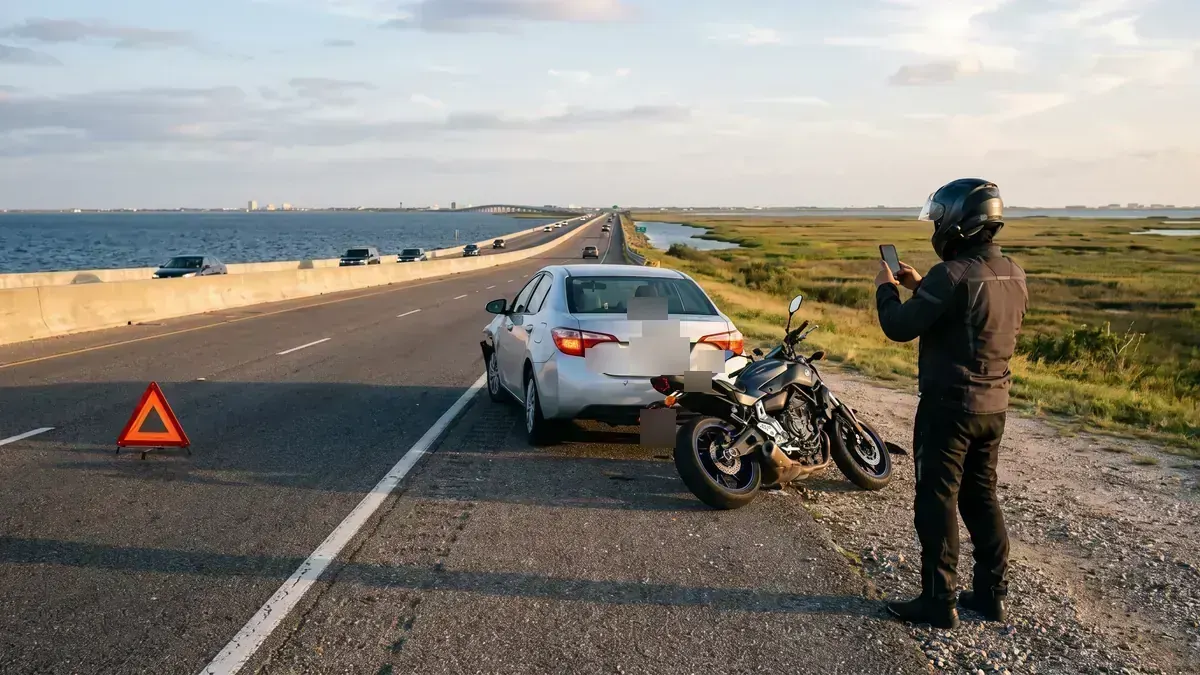
What you do after a motorcycle wreck depends on which hour you’re in, not a single checklist. The first few minutes protect your body. The next few protect your claim. Here’s how those priorities shift as the day goes on.
At the scene
Keep the helmet where it is. Unless it’s blocking your breathing or hiding serious bleeding, removing it is a job for paramedics, because an unnoticed neck injury can get worse in the seconds it takes to pull it off. Next, judge the traffic around you: when moving is possible and the lane is the more dangerous place to be, clear yourself and the bike to the shoulder. Then call 911. Ask for an officer to come out and write a report no matter how minor the wreck seems at the curb — a crash with no official report is much harder to prove later.
Before you leave
Once you’re safe, your phone becomes evidence. Photograph three things separately: the bike’s damage, your gear, and the road surface where it happened. A cracked helmet or a torn jacket sleeve tells a story a photo of the bike alone can’t. So does a patch of gravel or a pothole, if one played a part. Trade names, phone numbers, and insurance information with the other driver, and skip any conversation about who caused it. That part isn’t yours to settle at the curb.
That night
Watch yourself closely once the adrenaline wears off. Road rash, a stiff neck, or a headache that wasn’t there an hour ago can all show up late. Book a medical exam within a day or two even if you feel mostly okay standing in your driveway. A doctor’s note dated close to the crash carries weight later that a delayed visit doesn’t.
That first week
Call your own insurance company and give them the basic facts, not an opinion on fault. Most policies require prompt notice, and giving it isn’t the same as admitting you caused anything. This is also the week to get moving on a copy of the crash report, since it becomes the backbone of everything that follows. If your bills start arriving before any claim has resolved, who pays first is worth reading now instead of guessing. And while your filing deadline isn’t a first-week problem, the statute of limitations guide is there when you want the exact dates instead of a rough idea.
None of this needs to happen perfectly. But the choices you make in the first week, more than any other stretch, tend to set the tone for how smoothly the rest of your claim goes.
Common questions
I feel fine and just want to get the bike home. Is that a problem?
Ride or don't, but don't skip the report and the exam first. Adrenaline hides pain for hours, and a crash that felt minor at the curb can look different the next morning.
Do I have to talk to my own insurer if the wreck wasn't my fault?
Most policies require you to report a crash regardless of fault. Stick to the facts: date, location, who was involved. Save the argument over blame for later.
How soon should I actually see a doctor if nothing hurts yet?
Within a day or two, even if you walked away from the scene. Some injuries, like road rash infections or soft-tissue damage, take a day or more to announce themselves.
Related pages
Guides
Straight answers to the questions a Corpus Christi rider actually has after a wreck.
Learn more →Do I Need a Lawyer
Riders need one more often than drivers do. Not always, though.
Learn more →Crash Report
The same page of paper means three different things to three different readers.
Learn more →Adjuster Tips
Every question on that call has a purpose, and it isn't your comfort.
Learn more →See if you have a case — free
Answer a few quick questions. If your case qualifies, an independent attorney who serves Corpus Christi can review it at no cost.
Get a FREE Case ReviewNo fees unless you win. No pressure to hire anyone.