
Texas Motorcycle Helmet Law and Your Injury Claim
A missing helmet is one fact in your case, not the whole story an insurer wants it to be.
Get a FREE Case ReviewFree. No obligation. Takes about 2 minutes.
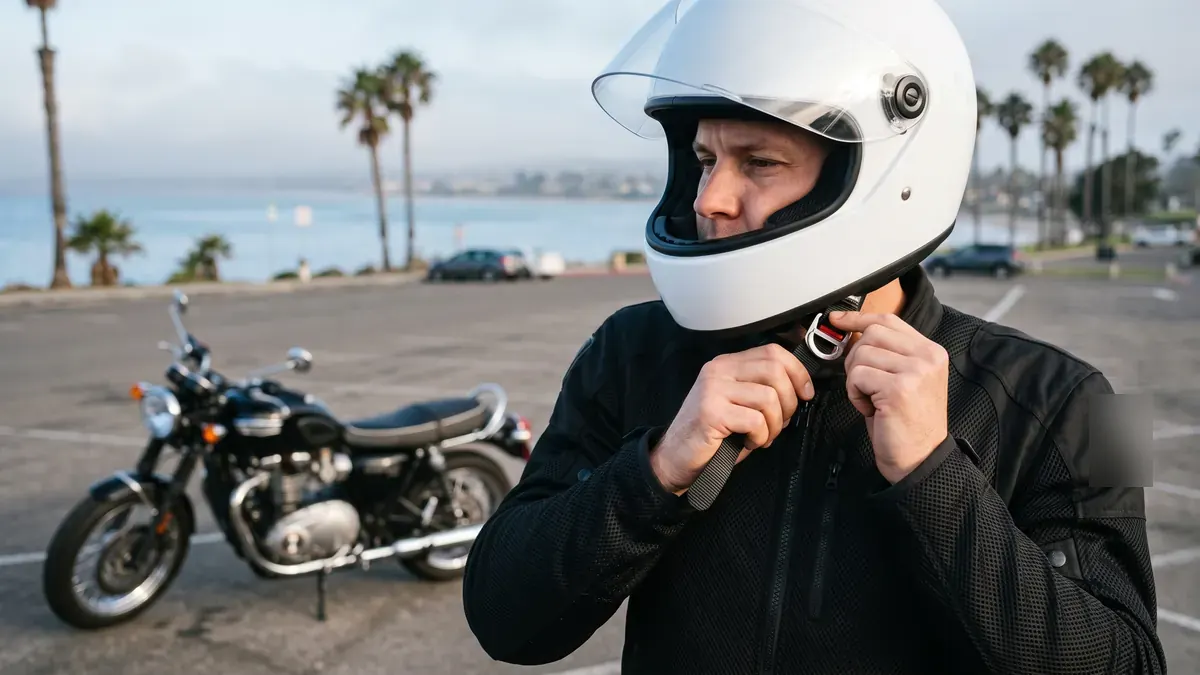
“I wasn’t wearing a helmet. Does that end my case?” That’s the question most riders ask first after a crash. Right behind it: “I was wearing one, so why does the adjuster keep bringing it up?” Neither question has a scary answer. A helmet, or the lack of one, is one fact in a bigger case. It isn’t a verdict, and it doesn’t decide the claim by itself.
What a missing helmet actually does to a claim
An insurer that learns you weren’t wearing a helmet may try to use it. Expect an argument that your own choices made your injuries worse than they should have been. That argument can chip away at what you’re offered, the same way any fault argument does, but it doesn’t erase your claim. The driver who hit you still caused the crash, and that fact doesn’t change because of what was, or wasn’t, on your head. The guide on shared fault covers how an argument like that actually plays out in dollars, not just in worry.
Wearing one and still hearing about it
Some riders who had a helmet on get the opposite treatment. An adjuster quietly assumes the injuries “shouldn’t” be that bad, since you did the safe thing. A helmet lowers risk. It doesn’t promise a mild outcome, and a serious injury stays serious whether or not you had one strapped on. Either way, hold onto the helmet itself as evidence; damage to it can back up how the crash actually happened.
What Texas actually requires
Texas put the helmet rule into statute 661.003. Riders under 21 always wear one. No exceptions. Riders 21 and older can skip it, but only two paths qualify: finishing a TDLR-approved rider safety course, or carrying health coverage that pays for injuries from a motorcycle collision. Nothing else counts, and neither one is automatic. An officer can’t stop you just to check for either one. They need a separate reason first, like riding bare-headed in plain view, before that question even comes up.
The fine, and why it’s the smallest part of this
Ten dollars. Fifty dollars. That’s the whole fine range for skipping a helmet without a qualifying exemption. It’s a real ticket. It isn’t close to the number that matters most after a crash. Medical bills and missed paychecks dwarf it fast, and that’s what a settlement actually has to account for once treatment is underway.
What the statewide numbers actually say
TxDOT’s 2024 numbers tell a hard story. 585 riders died in Texas that year. 37% of them weren’t wearing a helmet. That gap is real, and it’s exactly why the choice matters for your safety on the road. It has nothing to do with whether the other driver caused your crash in the first place.
Riders cited for splitting or filtering between lanes run into a similar pattern: one citation-worthy detail doesn’t erase everything else in the claim, and an insurer still has to prove its argument, not just make it.
Whatever you had on your head that day, this is still your case to bring. The crash is what created it. A helmet, or the lack of one, is just one detail an independent attorney has to work around, not the whole file.
Common questions
The officer wrote me up for no helmet. Does that citation end my case before it starts?
Not by itself. A citation is a traffic ticket, not a ruling on your injury claim. The driver who caused the crash still has to answer for it, and an independent attorney can walk through how much weight the ticket is likely to carry in your specific case.
If I'm riding as a passenger, am I bound by the same helmet rule?
Yes. Texas doesn't limit the headgear requirement to whoever's driving. The same rules, including the 21-and-older exemption, apply to a passenger riding along.
I'm over 21 and never took the safety course. Does my regular health insurance let me skip the helmet legally?
It might, if the plan actually covers medical costs from a motorcycle collision. That can be an individual policy, a group plan through an employer, or an HMO. Check your plan's language rather than assume, since it has to cover motorcycle-crash injuries specifically.
Related pages
Guides
Straight answers to the questions a Corpus Christi rider actually has after a wreck.
Learn more →Do I Need a Lawyer
Riders need one more often than drivers do. Not always, though.
Learn more →Crash Report
The same page of paper means three different things to three different readers.
Learn more →Adjuster Tips
Every question on that call has a purpose, and it isn't your comfort.
Learn more →See if you have a case — free
Answer a few quick questions. If your case qualifies, an independent attorney who serves Corpus Christi can review it at no cost.
Get a FREE Case ReviewNo fees unless you win. No pressure to hire anyone.